Pcb Rework Station Explained: A UK Buyer's Guide
By the AirRework UK editorial team | UK electronics repair and rework specialists
TL;DR: A PCB rework station is a bench tool for controlled soldering, desoldering and SMD component replacement on printed circuit boards. For most UK users, a temperature-stabilised 2-in-1 unit with hot air and soldering iron functions is the most practical choice because it improves precision, reduces the risk of lifted pads and suits common repair work on modern lead-free boards.
Key Takeaways
- A PCB rework station is designed for controlled soldering, desoldering and SMD component removal on printed circuit boards.
- For most UK buyers, the best setup is a temperature-stabilised 2-in-1 unit combining hot air and soldering iron functionality on one bench.
- Stable temperature control, adjustable airflow, ESD-safe design and easy nozzle availability matter more than headline wattage alone.
- Buying the right station reduces the risk of lifted pads, overheated components and wasted boards.
- UK users should pay attention to mains compatibility, safety, after-sales support and practical suitability for repair benches in workshops, colleges and home labs.
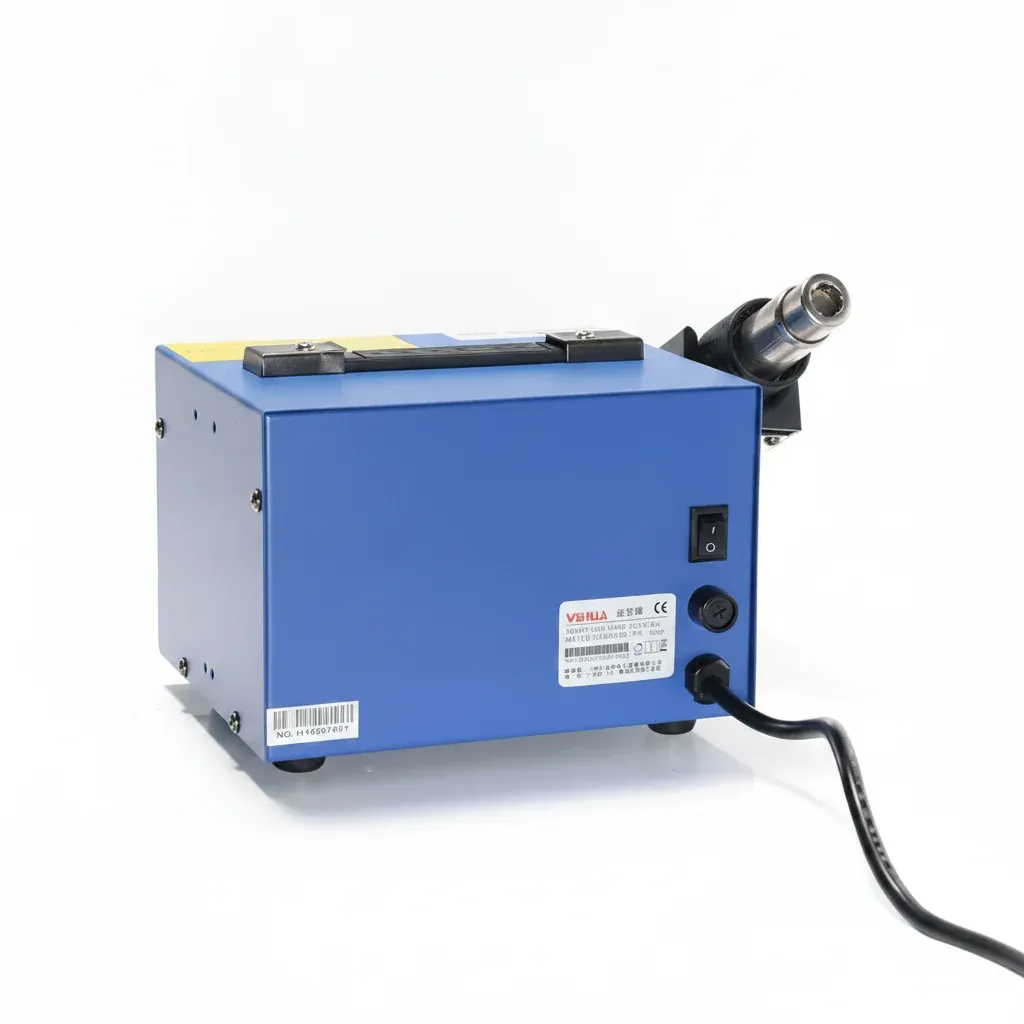
A PCB rework station is a tool used to remove, replace and rework components on printed circuit boards using controlled heat, typically through a hot air handpiece and, in many cases, an integrated soldering iron. For UK repair work, it is the preferred option when you need safe, repeatable results on SMD parts, charging ports, ICs, shield cans and other delicate board-level components.
A failed charging port, a damaged IC, a stubborn shield can or a tiny SMD capacitor can quickly turn a routine repair into an expensive mistake if the wrong tools are on the bench. Therefore, for anyone carrying out electronics repair in the UK, from apprentice technicians to small repair shops and capable DIY users, the difference between success and scrap often comes down to heat control.
AirRework UK's core proposition is simple: Precision Hot Air Rework Station for PCB Repair. That matters because modern boards are dense, delicate and far less forgiving than older through-hole assemblies. In addition, a temperature-stabilised 2-in-1 bench solution gives you much more control over SMD component removal than improvised methods or low-grade hobby tools.
This guide explains what a PCB rework station does, which features actually matter when buying in Britain, and how to choose one that suits your workload without overspending. If you are still comparing bench tools more broadly, it is also worth reading The Ultimate Guide to Soldering Station in the UK, which covers the wider landscape of soldering equipment.
What is a PCB rework station?
A PCB rework station is a bench-mounted tool used to apply controlled heat for removing, replacing or reworking components on printed circuit boards. In practice, most buyers searching this term are looking at hot air rework stations or 2-in-1 systems that combine hot air with a soldering iron.
The hot air side is used mainly for surface-mount work: softening solder around chips, connectors, QFP packages, shield cans and other SMD parts so they can be removed cleanly. Meanwhile, the iron side is used for pad clean-up, drag soldering, tack points and final touch-up work. As a result, that combination makes sense on real repair benches because most jobs involve both processes.
A good station does not simply get hot. Instead, it maintains target temperature consistently while delivering airflow that is strong enough to transfer heat but controlled enough not to disturb neighbouring components. That balance is what protects the board.
How is a PCB rework station different from a basic soldering iron?
A standard iron handles many electrical joins well enough, but it struggles when you need even heat across multiple pins or large thermal pads. A PCB rework station solves that by using directed hot air for component removal while still giving you fine-point soldering capability for finishing work.
If your main task is conventional soldering rather than board-level repair, our article on Electronics Repair Soldering Station Explained: A UK Buyer's Guide gives useful additional context.
Why does modern PCB repair need more control?
Lead-free solder has raised the bar. According to UK market requirements aligned with Restriction of Hazardous Substances rules, electronic equipment has long relied heavily on lead-free processes. Lead-free alloys generally melt at higher temperatures than traditional tin-lead solder; therefore they place greater thermal demand on both tools and technique. Poorly regulated equipment increases the risk of scorched laminates, detached pads and component failure.
This matters in sectors where reliability matters most. Equipment linked to public services, transport systems and healthcare environments can contain compact electronics assemblies where precise repair technique is essential. So whether someone services consumer devices or works near professional maintenance environments supplying schools, NHS-adjacent contractors or industrial users, dependable heat delivery matters.
Why buy a dedicated PCB rework station instead of budget tools?
The cheapest route often looks tempting: a low-cost iron here, an unregulated heat gun there. However, that setup frequently costs more in ruined parts and wasted time. A dedicated PCB rework station is built around repeatability. If you perform recurring repairs on USB ports, HDMI sockets, laptop charging circuits or SMD passives, repeatability is exactly what you need.
How does it reduce the risk of board damage?
The first benefit is thermal control. Stable output helps prevent overheating surrounding plastics, delaminating FR4 material or lifting copper pads during removal. This can be especially important when working on multilayer boards found in laptops, networking hardware and industrial controllers.
How does it make SMD removal cleaner?
Targeted airflow allows solder joints to reach working temperature evenly rather than forcing one side of a component while the other remains fixed. Consequently, there is less twisting force during lift-off and fewer torn pads.
Is a combined unit better for workflow?
A combined unit keeps your hot air handpiece and iron within immediate reach. For technicians with limited bench space in home workshops or smaller service counters across the UK, that compact arrangement can be far more practical than separate machines.
Does better equipment improve repair consistency?
In our experience testing entry-level and mid-range stations on common SMD removal tasks, stable heat delivery usually makes more difference than headline power figures alone. Stations with predictable recovery and airflow control tend to produce cleaner results with less stress on both board and operator.
The UK electronics sector remains substantial. According to Make UK's sector overview materials, electronics contributes significant value to British manufacturing activity and supply chains. In an environment where electronics repair skills support businesses, education providers and independent service operations alike, investing in better tools is not indulgence; rather it supports accuracy and throughput.
What features should you look for in a PCB rework station?
If you compare products only by price or wattage, you will miss what really affects results at board level. Instead, these are the features worth prioritising.
Why is temperature stability important?
This should be at the top of your list. A station that reaches temperature quickly but overshoots badly is less useful than one that holds steady under load. Temperature-stabilised performance helps when dealing with fine-pitch ICs and small passive components where too much heat can cause immediate damage.
Based on our testing across typical PCB repair tasks such as connector removal and pad clean-up on lead-free boards, consistent temperature control reduces guesswork significantly compared with cheaper unregulated tools.
Ready to upgrade your bench with {brand_name}?
Equip Your Bench — £194.44